 Image 1 of 1
Prerequisite: Module 2, or the 10-hour online Anatomy + Movement Prep Program.
Here you develop the skills to work confidently and responsibly with the real bodies in front of you, rather than expecting every student to fit the pose, the sequence or the traditional expression of a posture.
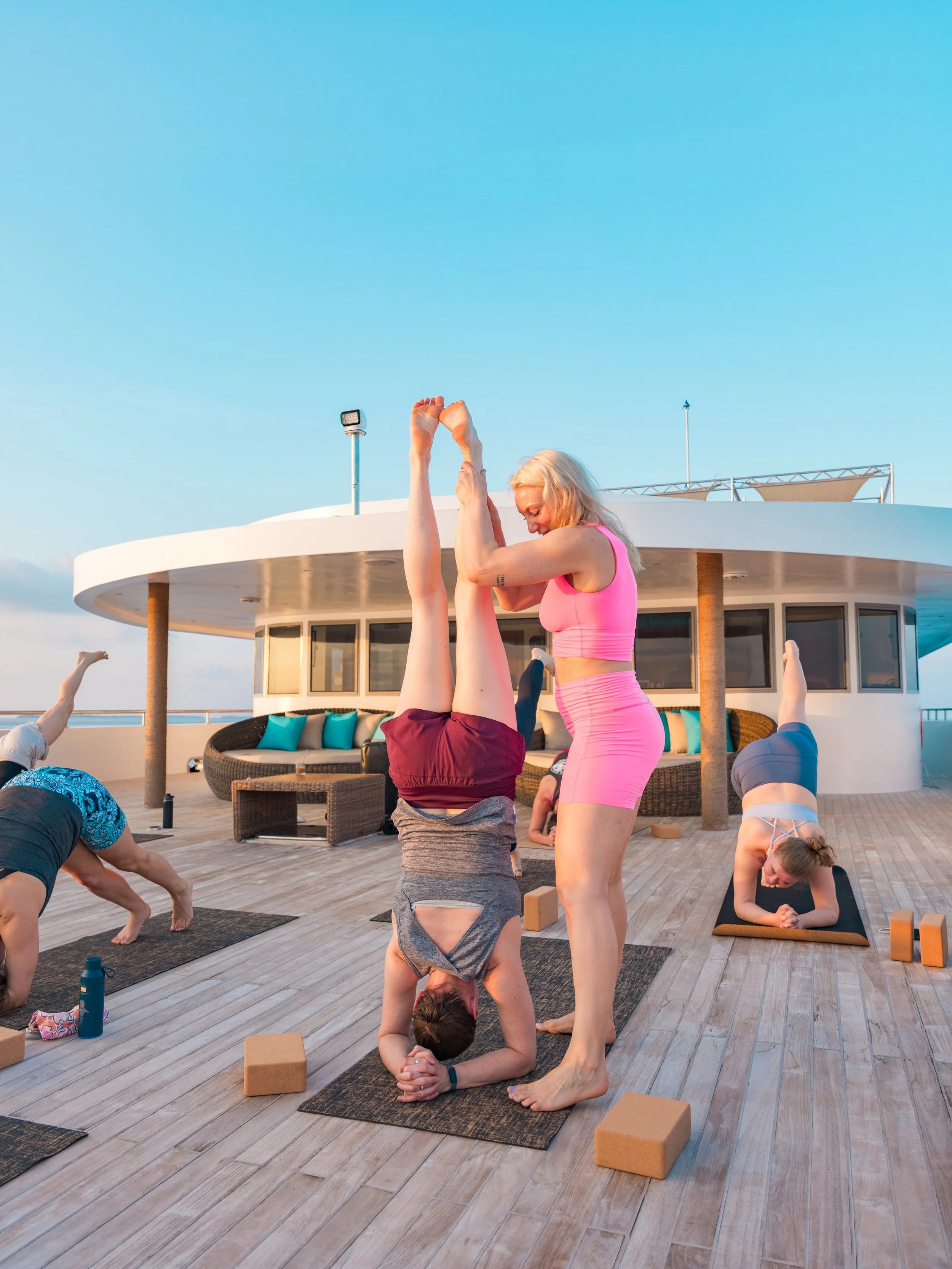
Building on Module 2, you'll apply kinesiology through hands-on assists, observation, cueing and adaptability. The emphasis isn't on making a pose look a certain way. It's on understanding the intention of the posture, observing the body in front of you, and using touch, language, props or modifications to support that intention.
The module is taught largely in person in NYC, through an assists weekend and weekly assist labs, and closes with your final practical exam and graduation.
Core curriculum
Hands-on assists: the purpose of touch, consent and communication, and when to assist versus when to step back
Applying kinesiology to assists; verbal vs. tactile cueing
Stronger observation skills; adapting poses rather than forcing alignment
Props and purposeful modifications; creating choice and autonomy in practice
Teaching beginners, older adults and changing bodies; prenatal and postnatal considerations
Common injuries and physical limitations; adapting sequences for different populations
Teaching private vs. group settings
Becoming a professional: Yoga Alliance credentialing and continuing education, the Code of Conduct, Scope of Practice and Equity Position Statement, professional boundaries, liability insurance, and business basics for new teachers
Final practical exam: teaching a full 60-minute class
Expect significant partner work, observation, hands-on application, case-based learning and practice teaching.
Schedule
Weekly virtual sessions:
Tuesdays 6–9pm and Thursdays 7–8am, as in the other modules.
Assists weekend, in person in NYC, Apr 23–25:
Fri 6–9pm, Sat 9am–6pm, Sun 9am–5pm.
Assist labs, in person in NYC:
Wednesdays Apr 21, Apr 28 and May 5, 6–9pm.
Closing weekend, in person in NYC:
Fri May 7, 6–9pm, then Sat May 8, 9am–5pm for practical exams and graduation
(50 live, 6 recorded lessons and homework)
What comes next: when you finish the 200-hour, the Integration Mentorship is there for the next step: ten weeks of real teaching reps and honest feedback as you start leading your own classes.
Prerequisite: Module 2, or the 10-hour online Anatomy + Movement Prep Program.
Here you develop the skills to work confidently and responsibly with the real bodies in front of you, rather than expecting every student to fit the pose, the sequence or the traditional expression of a posture.
Building on Module 2, you'll apply kinesiology through hands-on assists, observation, cueing and adaptability. The emphasis isn't on making a pose look a certain way. It's on understanding the intention of the posture, observing the body in front of you, and using touch, language, props or modifications to support that intention.
The module is taught largely in person in NYC, through an assists weekend and weekly assist labs, and closes with your final practical exam and graduation.
Core curriculum
Hands-on assists: the purpose of touch, consent and communication, and when to assist versus when to step back
Applying kinesiology to assists; verbal vs. tactile cueing
Stronger observation skills; adapting poses rather than forcing alignment
Props and purposeful modifications; creating choice and autonomy in practice
Teaching beginners, older adults and changing bodies; prenatal and postnatal considerations
Common injuries and physical limitations; adapting sequences for different populations
Teaching private vs. group settings
Becoming a professional: Yoga Alliance credentialing and continuing education, the Code of Conduct, Scope of Practice and Equity Position Statement, professional boundaries, liability insurance, and business basics for new teachers
Final practical exam: teaching a full 60-minute class
Expect significant partner work, observation, hands-on application, case-based learning and practice teaching.
Schedule
Weekly virtual sessions:
Tuesdays 6–9pm and Thursdays 7–8am, as in the other modules.
Assists weekend, in person in NYC, Apr 23–25:
Fri 6–9pm, Sat 9am–6pm, Sun 9am–5pm.
Assist labs, in person in NYC:
Wednesdays Apr 21, Apr 28 and May 5, 6–9pm.
Closing weekend, in person in NYC:
Fri May 7, 6–9pm, then Sat May 8, 9am–5pm for practical exams and graduation
(50 live, 6 recorded lessons and homework)
What comes next: when you finish the 200-hour, the Integration Mentorship is there for the next step: ten weeks of real teaching reps and honest feedback as you start leading your own classes.